Rhythm Training That Does Not Feel Like a Metronome
Rhythm training is practising to play in time: holding a steady pulse, landing notes exactly on the beat, and keeping tempo without rushing or dragging. It is a completely separate skill from knowing the notes, and it is usually what makes the difference between playing that feels solid and playing that feels shaky, especially the moment you play with other people.
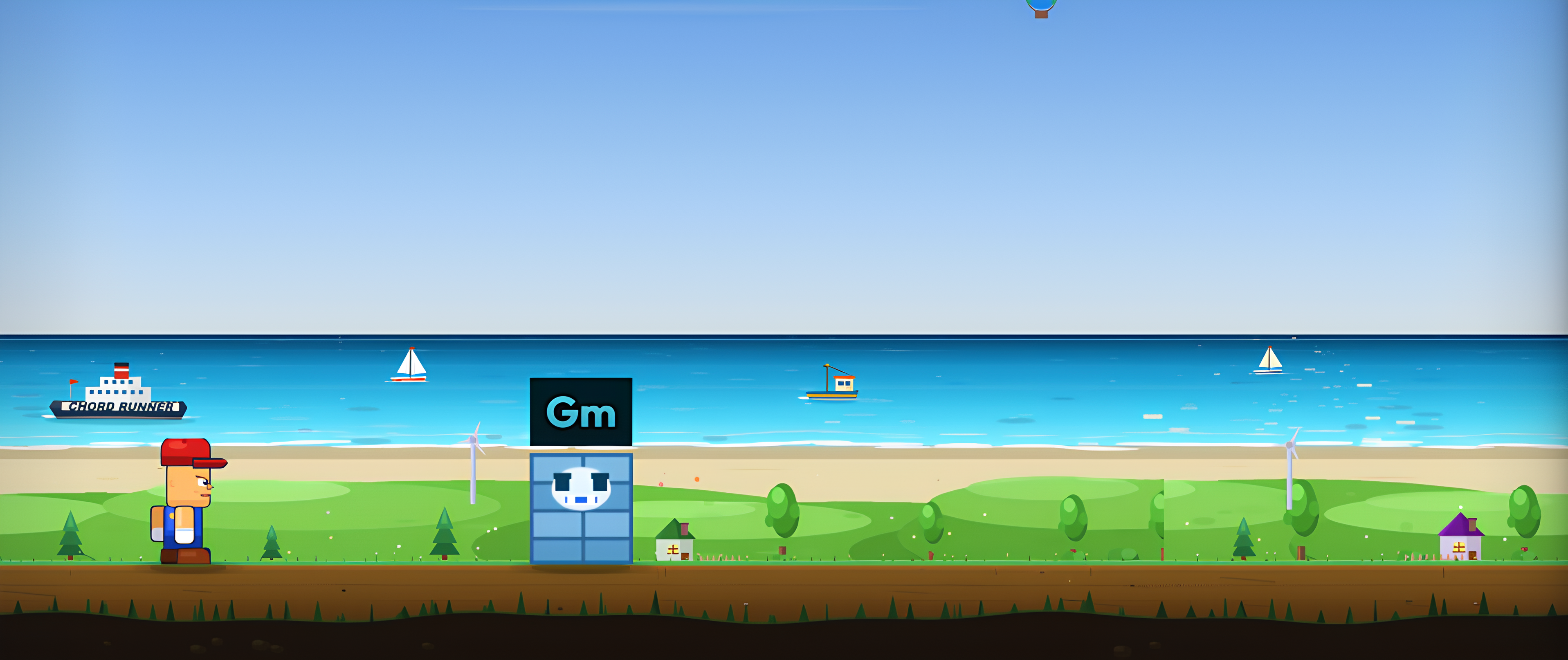
Train timing without a boring metronome
Play the chord before the obstacle reaches you, and you are training rhythm. No download, no signup. MIDI keyboard or microphone.
▶ Try ChordRunner Free Free in the browser - timing you can feel, not just count.Why timing beats speed
Ask any band what makes a player easy to work with and the answer is rarely "fast", it is "solid". Music is a shared clock, and a part that sits exactly in the pocket lifts everything around it, while a part that rushes or drags pulls the whole thing down no matter how clever the notes are. This is why a drummer's steady hi-hat can carry a song and why a slightly wrong note played in time still grooves. Timing is the skill that lets people play together at all.
Test your timing
Start the metronome, then tap the beat button in time with the clicks. It will tell you how close you are. Sound needs a tap first.
How the runner forces steady time
A metronome is honest but easy to ignore; a game is not. In ChordRunner the obstacles arrive on a clock, so a chord played late does not just score lower, it fails, because the obstacle reaches you first. That turns steady timing from an abstract goal into the thing keeping you alive, and it trains the same read-ahead, stay-in-the-pocket instinct that sight reading needs. You stop counting and start feeling the pulse, which is where real rhythm lives.
Metronome and per-chord timing modes
For focused work, the Chord Progression mode adds an actual metronome and per-chord timing: you loop a progression at a set tempo, with each chord given its own beat, and play the changes exactly in time. It is the deliberate, slow-it-down complement to the runner's pressure, the two together covering both feel and precision. Start slow enough to nail it, then raise the tempo only when you are locked in.
Practise rhythm in the game
Open the game and play any mode: the runner core means every chord has to land in time, so you are training rhythm whether you think about it or not. For targeted work, use Chord Progression mode with the metronome on and a slow tempo, and play each chord exactly on the beat. Raise the speed only when the click disappears under your playing. Play on a MIDI keyboard or into your microphone, free in the browser, nothing to install.
Common questions
What is rhythm training?
Rhythm training is practising to play in time: keeping a steady pulse, placing notes exactly on the beat, and holding tempo without speeding up or dragging. It is a separate skill from knowing the notes, and it is often what separates a performance that feels solid from one that feels shaky.
Why is timing more important than speed?
Because music is a shared clock. A slightly wrong note played in time still grooves, but right notes played out of time fall apart, especially with other musicians. Steady timing is what lets people play together, and it makes even simple parts sound intentional and musical.
How do I practise with a metronome?
Set a slow tempo you can nail, play so your notes land exactly with the click, and only raise the speed once you are locked in. Feeling the click disappear underneath your playing means you are on the beat. Short daily sessions beat occasional long ones.
How does ChordRunner train rhythm?
Its runner core is a timing engine: chords have to be played before the obstacle reaches you, so you are always racing a clock. The Chord Progression mode adds a metronome and per-chord timing, turning steady, in-time playing into the thing that keeps you alive.