Music Practice Games That Work
Music practice games work when the game and the practice are the same thing: you play real chords on a real instrument, get instant feedback, and keep coming back because it is fun. The learning was never the hard part, showing up every day was, and a good practice game solves exactly that. This is the idea ChordRunner is built on.
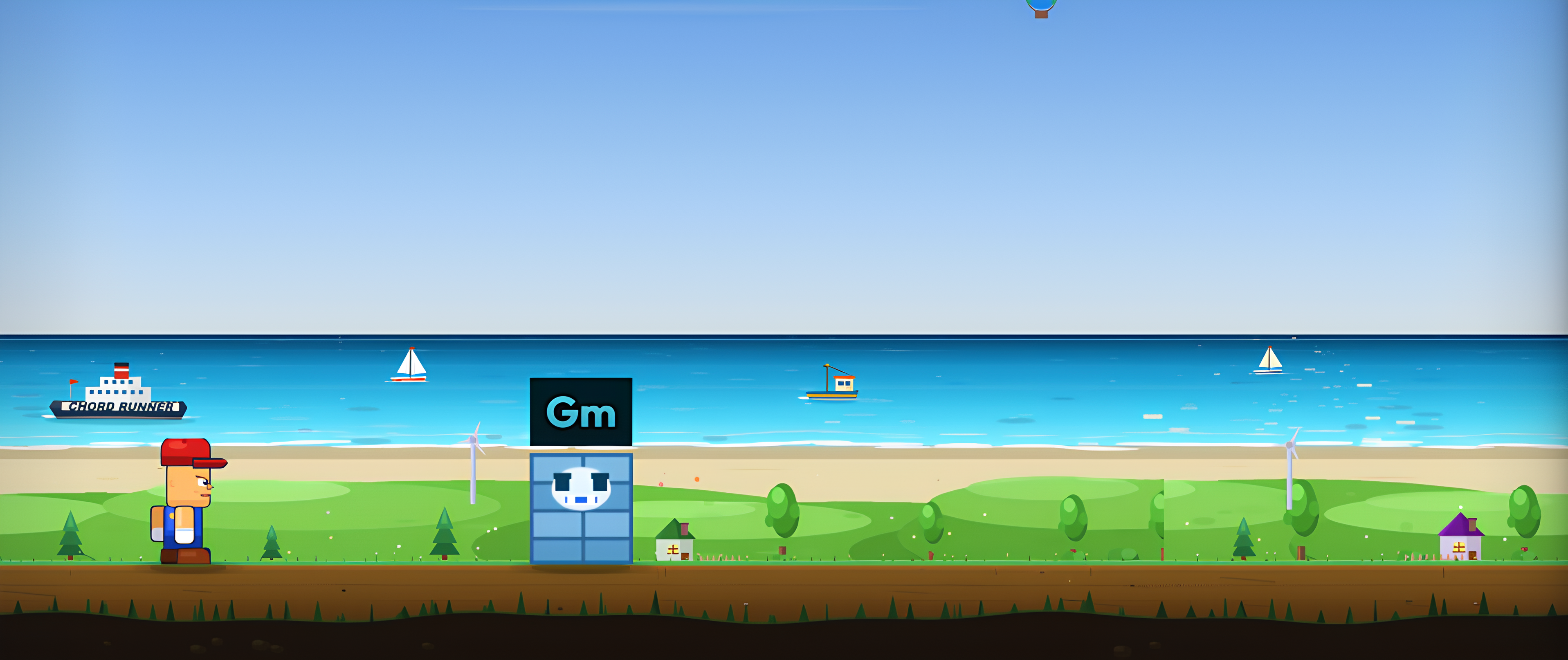
Make practice the fun part
Real chords, instant feedback, reasons to come back. No download, no signup. MIDI keyboard or microphone.
▶ Try ChordRunner Free Free in the browser - practice that feels like play.Why games beat willpower
Almost nobody quits learning an instrument because they ran out of things to learn. They quit because practice felt like a chore and the daily habit broke. That is a motivation problem, not an information problem, and it is precisely what games are good at. Streaks, scores, goals and a little competition supply the pull that willpower cannot sustain, so the reps keep happening. Point that machinery at real practice instead of a time-waster and you get consistency, which is the one thing that actually builds skill.
What a good practice game needs
Tap each ingredient to see why it matters, and how ChordRunner delivers it.
Tap an ingredient above.
What a good practice game needs
The ingredients above are not decoration; each one fixes a real way that practice fails. Without real instrument input, a music game teaches you nothing about your instrument, it is just tapping in time. Without instant feedback, you rehearse your mistakes. Without difficulty that follows you, you either stall or give up. And without reasons to return, the best-designed lesson in the world goes unopened. A game that nails all four turns learning from a duty into a habit.
Practice loops in ChordRunner
ChordRunner strings those ingredients into loops. A ten-minute session on chord training gives instant feedback at rising tempo; a multiplayer round adds stakes and other players; the weekly cooperative event gives a reason to log in on a tired day. Coins and cosmetics reward the streak without turning it into pay-to-win. The through-line is that the fun and the practice are the same action, so time spent enjoying the game is time spent getting better.
Try a music practice game now
The quickest way to know whether a practice game works for you is to play one for five minutes. Open ChordRunner, start Standard Levels on a MIDI keyboard or your microphone, and notice how the instant feedback pulls you into "one more run". That pull, aimed at real chord practice, is the whole point. Free in the browser, no signup, nothing to install.
Common questions
Do music practice games actually work?
They work when the game action is real practice, not a distraction from it. A game that has you play actual chords on a real instrument, with instant feedback and reasons to return daily, turns the hardest part of learning, consistency, into something you want to do. That is how ChordRunner is built.
Why is a game better than a practice app?
Because motivation, not information, is the bottleneck. Most people know what to practise; they just do not do it regularly. Games supply the missing piece, streaks, scores, goals and fun, so the reps happen. The learning content can be identical; the game is what gets you to show up.
What makes a good music practice game?
Real input on a real instrument, instant right-or-wrong feedback, difficulty that follows your progress, and reasons to come back like goals, rewards and other players. Without real input a music game is just a rhythm-tapping toy that teaches you nothing about your instrument.
Is ChordRunner free to try?
Yes, it is free to try in the browser with no signup, including the Standard Levels. You play with a MIDI keyboard or your microphone, so you can find out in a few minutes whether learning music through a game works for you.