Real-Time Multiplayer Music Learning
Multiplayer music learning means practising a real music skill, playing chords, alongside other people instead of alone: a shared clock, live scores, and the small jolt of pressure that makes recall stick. ChordRunner does it in real time in the browser, and you play with your own instrument through a MIDI keyboard or a microphone, not by clicking buttons.
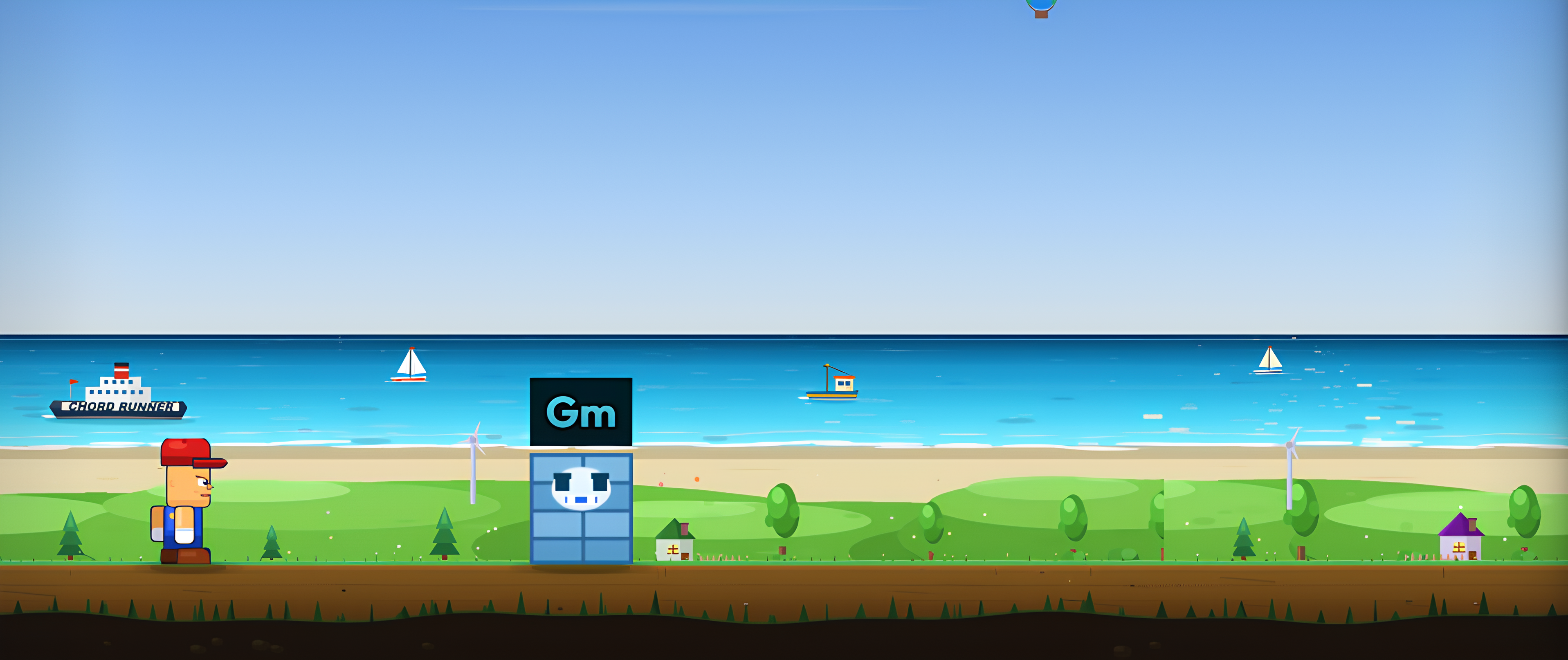
Learn music with other players, live
Join a session, play the same chords under one shared countdown, and watch the scoreboard move in real time. No download, no signup. MIDI keyboard or microphone.
▶ Try ChordRunner Free Free in the browser - jump into a live session right now.Why practising with others beats practising alone
Solo practice has one quiet weakness: nothing is at stake. You can play a chord slightly late, half-right, or talk yourself out of the hard one, and no one notices. Playing next to other people removes that escape hatch. When a shared clock is ticking and a scoreboard is watching, you find out fast which chords you actually own and which ones you only recognise.
That pressure is the point. The skill you are really building is recall under time, the same thing a real song demands when the next chord arrives whether you are ready or not. A live session compresses hours of that into a few competitive minutes, and it is genuinely more fun than a metronome, which is the honest reason people come back and keep the reps going.
See a live session in action
This is a small mock of what everyone sees during a real session: a synchronised countdown, then scores climbing live and the leaderboard reordering as players land chords. Press start:
In the real game those scores are the chords you and the other players are landing, on your own instruments, at the same moment.
How a live chord session works
Every mode in ChordRunner except the two solo ones can be opened as a public session that other players join from a live "Sessions" counter on the mode card. When enough players are ready, the match starts for everyone at once, and from there it is the same game you already know, just shared.
A synchronised countdown and timed rounds
Nobody gets a head start. The session runs a synchronised three-second countdown, then every player begins from zero at the same instant. Endless sessions play in two-minute rounds; when the host sets a length, the match runs for that time, clamped to a fair two-to-five-minute competitive window. In modes with monsters or bosses, a round does not simply end on the timer while someone is still fighting, so a strong run is never cut off cheaply.
The in-match leaderboard
As you land chords, your running score updates and the leaderboard reorders live, exactly like the mock above. This is a per-match scoreboard, the story of this round, not a lifetime ranking, which keeps every session a fresh, even start rather than a grind to protect a number. When the clock hits zero, final rankings are shown and you can go again.
Co-op or competitive, your call
Multiplayer here is not only about beating other people. There are two honest shapes to it, and you pick the one that fits your mood.
Compete: head-to-head sessions
Public matchmaking sessions score everyone against each other. It is the fastest way to find your real edge, because you are measured against players who are also trying, not against yesterday's you. If you like the pressure of a timed run, the chord challenge is the solo version of the same idea, and multiplayer turns it into a race.
Cooperate: play toward a shared goal
Prefer teamwork? The weekly Global Event is cooperative: every correct chord from every player adds to one shared community goal, so a beginner's steady major triads and an advanced player's extended chords both count toward the same target. It is a low-stakes way into multiplayer for anyone who finds a scoreboard stressful, and a reason to come back each week.
Play with people you know
You do not have to play with strangers. You can invite a friend to a private room, where the host chooses the mode and settings, and practise together in real time even from different houses. It turns solo chord training into something you can do with a bandmate, a teacher, or a practice buddy.
Try a live session in the game
The quickest way to feel the difference is to open a session yourself. In the game, pick any mode, watch the Sessions counter, and join one that is filling up, or create your own and share it. Start with Standard Levels so the chords are familiar and the only new thing is the company. You will notice within a round which chords you play on reflex and which ones the clock exposes, and that list is your practice plan for the week.
Everything works with the instrument you already have: plug in a MIDI keyboard, or let the microphone listen to your acoustic piano or guitar. No download, no signup, free in the browser.
Common questions
Is ChordRunner multiplayer really in real time?
Yes. Everyone in a session sees the same synchronised three-second countdown, then plays the same chords against the same clock. Scores update live as you play, so the leaderboard reorders in front of everyone during the round. It runs in the browser over a websocket connection, no download.
Do I need a MIDI keyboard to play multiplayer?
No. Multiplayer uses the same input as the rest of ChordRunner: a MIDI keyboard if you have one, or your microphone listening to a real piano or guitar. Two players in the same session can use different inputs; the game only cares whether the chord was correct.
Can I play cooperatively instead of competing?
Yes. Competitive matchmaking sessions score players against each other, but the weekly Global Event is cooperative: everyone's correct chords add to one shared goal. So you can play head to head for the scoreboard, or team up toward a common target.
Which practice modes support multiplayer?
Every playable mode can host a public session except Ear Training and Learning, which are solo by design. That includes Standard Levels, Custom, Survival, Single Notes, Harmonised Chords, Chord Progression, Boss League and Speed Challenge.