Major Seventh Chords Explained
A major seventh chord is a major triad with the major seventh stacked on top, root, major third, perfect fifth and major seventh, so Cmaj7 is C, E, G and B. Where a dominant 7th feels tense and wants to move, a maj7 feels warm and at rest, the lush, floating sound behind jazz ballads, bossa nova and a thousand soul records.
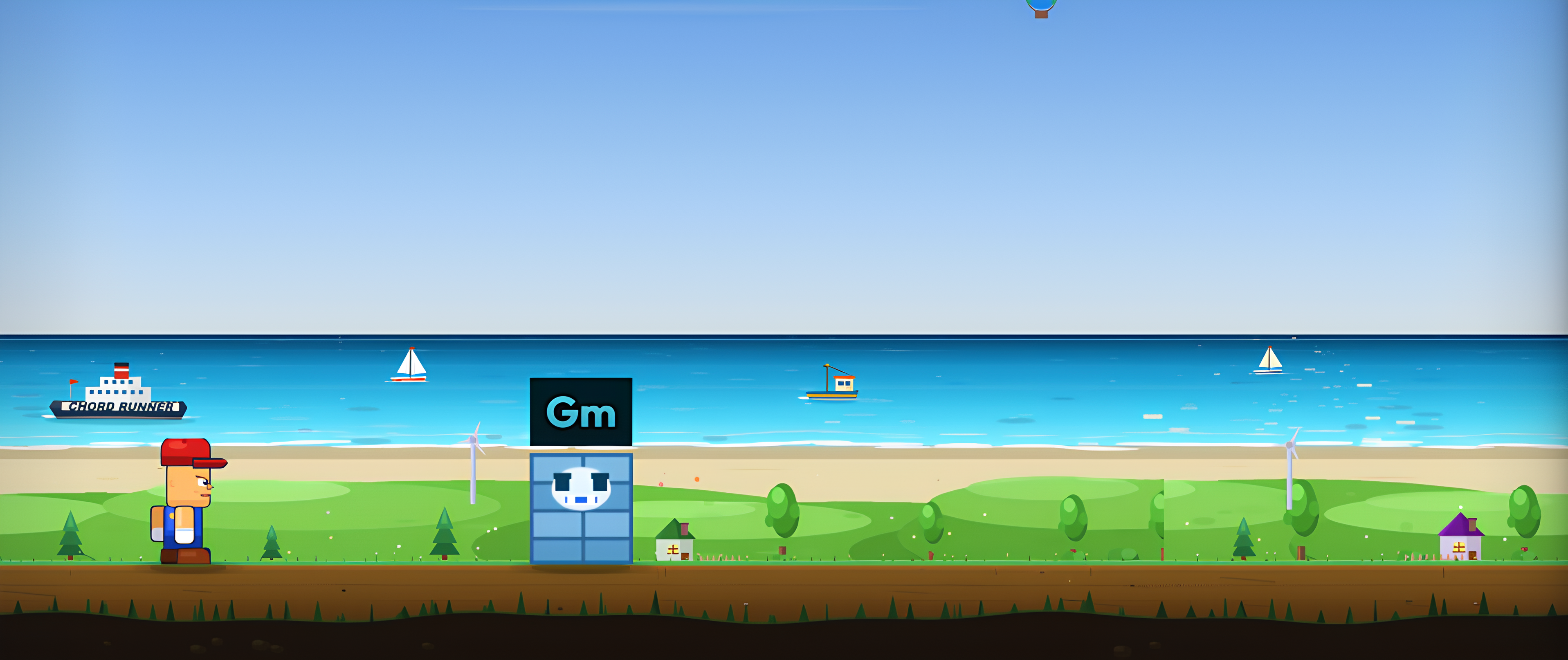
Drill maj7 chords by playing them
See a maj7, play it, know instantly if you nailed it. No download, no signup. MIDI keyboard or microphone.
▶ Try ChordRunner Free Free in the browser - build a major 7th pool and go.The maj7 sound, and where you hear it
The magic of a major seventh chord is the half step at the top: the major seventh sits just one semitone below the root's octave. In Cmaj7 that is the B rubbing gently against the C above it, close enough to shimmer but not clash. That soft friction is what makes the chord sound dreamy rather than plain, and it is why the maj7 is the default colour for anything that wants to feel warm and unhurried.
You hear it as the arrival chord: the I of a key voiced as a maj7 feels like coming home to a comfortable room. The Beatles' Something opens by walking C, Cmaj7, C7, letting you hear the maj7's calm turn into the dominant 7th's pull in three chords. Bossa nova is practically built from maj7s and min7s trading places.
Build any major 7th chord
Pick a root and watch the four notes light up: root, major 3rd, 5th and major 7th. The keyboard shows the notes of the chord, in any octave.
The formula, and a few to know first
Every major 7th is the major triad plus the note one half step below the octave. Learn the formula once and all 12 follow. Start with these three:
- Cmaj7 = C E G B. The plain-paper example; hear the B shimmer under the C.
- Fmaj7 = F A C E. A favourite opening chord for ballads; warm and open.
- Gmaj7 = G B D Gb. Bright and floating. (The game spells the major 7th as Gb by its flat convention; on a lead sheet you will often see it written F#.)
Once those are automatic, use the builder above to walk the rest, then drill them until the shape appears under your hands without thought, which is what chord training in the game is for.
maj7 versus the other sevenths
Sevenths are where accompaniment starts sounding grown up, and the three common ones are one note apart at the top. Keep the major triad and add the major seventh, you get maj7 (calm). Flatten that seventh and you get a dominant 7th (tense). Flatten the third as well and you get a minor 7th (smooth and mellow). Training your ear to tell these apart is a core chord recognition skill, because on paper they look almost identical.
Practise major 7ths in the game
Open the game and reach Standard Levels' seventh-chord stage, or build a Custom pool of major 7ths across all 12 roots. Play each on your MIDI keyboard or into your microphone and get told instantly whether the shape was right. The tempo rises as you climb, so a maj7 you can find slowly has to become one you can find on reflex. Free in the browser, nothing to install.
Common questions
What is a major seventh chord?
A major seventh chord is a major triad with the major seventh added on top: root, major third, perfect fifth and major seventh. In C that is C, E, G and B. It sounds lush, warm and slightly dreamy, and unlike a dominant 7th it feels at rest rather than tense.
What is the difference between maj7 and a dominant 7th?
The seventh. A major 7th uses the natural seventh, one half step below the octave, so Cmaj7 is C E G B and sounds smooth. A dominant 7th uses the flat seventh, so C7 is C E G Bb and sounds tense and bluesy. It is a one-note change with a huge difference in mood.
Where are major 7th chords used?
Everywhere a warm, floating sound is wanted: jazz standards, bossa nova, soul, and countless ballads. The Beatles' Something opens by walking C, Cmaj7, C7. As the I chord of a key, maj7 is often the home you arrive at rather than the tension you leave.
How do I practise all 12 major 7th chords?
One at a time, then mixed, with instant feedback. In ChordRunner, Standard Levels introduce seventh chords, and Custom mode lets you build a pool of major 7ths across all 12 roots and drill them on a MIDI keyboard or through your microphone.