Master All 12 Minor Chords on Piano
A minor chord is a major chord with its middle note dropped by one semitone, root and fifth stay put, only the third moves. C major's E becomes Eb and you get C minor. This page lists every minor chord with its notes and fingering, explains why one semitone changes the whole mood of a chord, and lets you test how many you can build from memory below.
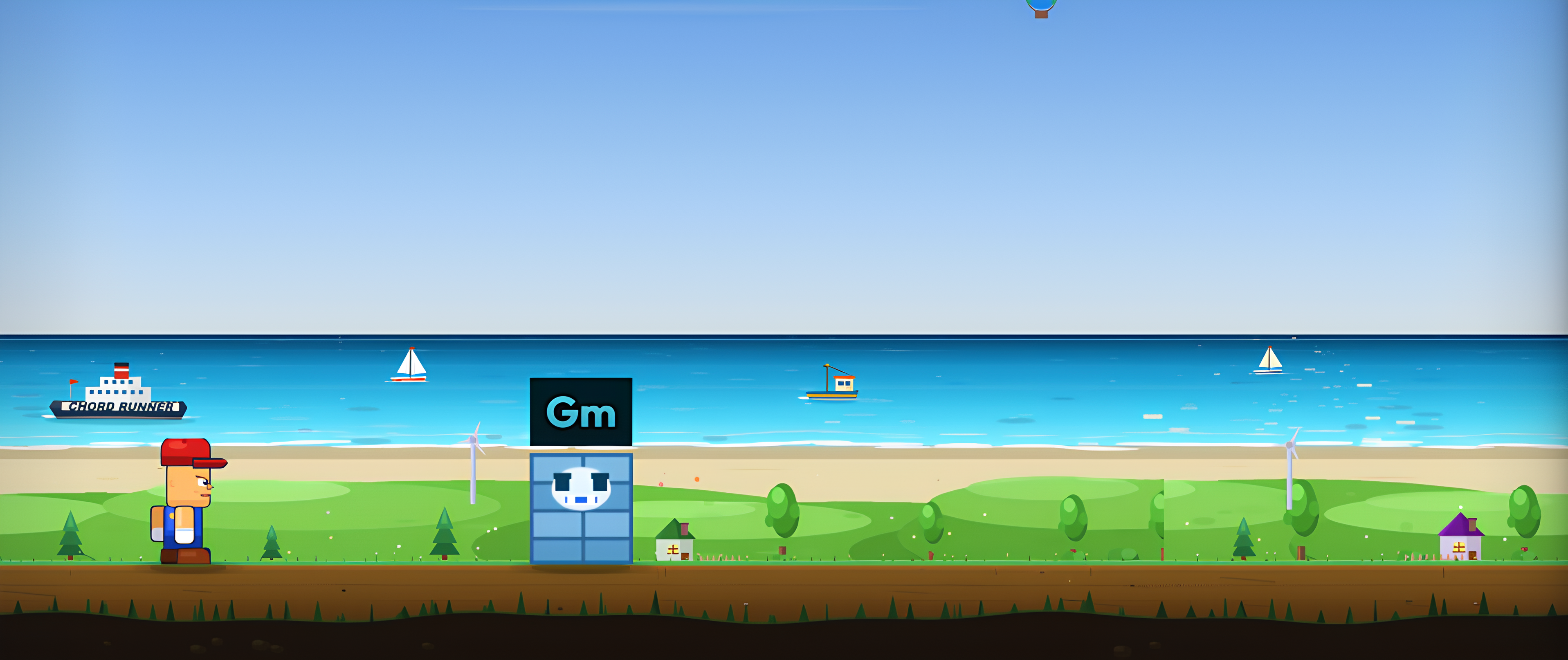
Learn by playing the actual game
A chord appears, you play it, the runner keeps going. No download, no signup. Plug in a MIDI keyboard or just use your microphone.
▶ Try ChordRunner Free Free demo - no download, no signup.Minor vs major: one note of difference
Take any major chord, root, major third, perfect fifth, and drop the third by a single semitone, and you have the minor version of the same chord. C major is C, E, G. Pull the E down to Eb and nothing else moves: C minor is C, Eb, G. The root anchors the chord and the fifth supports it, both completely unchanged. The third is the only note doing any work here, and a single semitone is the entire distance between bright and dark.
That is also why telling them apart by ear or under time pressure is genuinely harder than it looks: two chords that differ by one note out of three are much closer neighbours than two chords built from entirely different shapes. See major chords for the full recipe this is built on.
All 12 minor chords
Same recipe, all 12 roots. Root position fingering mirrors the major chord exactly, thumb-middle-pinky (1-3-5) in the right hand, pinky-middle-thumb (5-3-1) in the left, since only the third moved and a finger still belongs on it either way:
| Chord | Notes | RH fingering |
|---|---|---|
| Cm | C - Eb - G | 1-3-5 |
| C#m | C# - E - Ab | 1-3-5 |
| Dm | D - F - A | 1-3-5 |
| Ebm | Eb - F# - Bb | 1-3-5 |
| Em | E - G - B | 1-3-5 |
| Fm | F - Ab - C | 1-3-5 |
| F#m | F# - A - C# | 1-3-5 |
| Gm | G - Bb - D | 1-3-5 |
| Abm | Ab - B - Eb | 1-3-5 |
| Am | A - C - E | 1-3-5 |
| Bbm | Bb - C# - F | 1-3-5 |
| Bm | B - D - F# | 1-3-5 |
Compare any row here to the same root on the major chords table: root and fifth match exactly, the third is the only column that changed.
Try it: build the chord before time runs out
A minor chord name appears from the table above, you click its three notes on the keyboard below before the bar drains. Get it right and the next one comes a little faster:
Drilling major and minor together
Once minor chords are solid on their own, the real test is mixing them with major chords in random order. That mix is where the actual skill lives: not "can I build a minor chord" but "can I tell, the instant I see or hear the name, whether the third needs to move down a semitone or stay put." Drill C, then Cm, then G, then Gm, in an order you cannot predict, and pay attention to which roots you hesitate on.
A useful check: if you can play 12 minor chords perfectly in the fixed order you learned them, but slow down or fumble the moment major and minor are shuffled together, the shapes are memorised but the distinction is not automatic yet. That distinction, more than either chord alone, is the actual skill worth drilling.
You can put exactly that mixed, randomised drill to the test for free in ChordRunner, right in the browser, on a MIDI keyboard or straight into a microphone.
Common questions
What is the difference between a major and minor chord?
One note. The third of the chord drops by one semitone. C major is C, E, G; C minor is C, Eb, G. Root and fifth stay exactly the same, only the middle note moves down a half step, and that single semitone is what turns a bright sound into a darker one.
What notes make up a minor chord?
A root, a minor third (3 semitones up), and a perfect fifth (7 semitones up). C minor is C, Eb and G. The fifth is identical to the major chord on the same root; only the third is a semitone lower.
Why is telling major and minor apart under pressure so hard at first?
Because the two shapes overlap almost entirely, root and fifth are identical, so your hand has to notice a single semitone difference instead of a completely different shape. That is a finer distinction than most new skills ask for, which is exactly why it needs its own dedicated drilling instead of assuming it comes for free once major chords are solid.
Should I learn all 12 major chords before starting minor chords?
Not entirely. Learn a handful of major chords first so your hand knows what a solid triad feels like, then bring minor chords in early and drill both together. Telling them apart under pressure is its own skill, and delaying it just pushes the hard part later instead of removing it. See major chords for the full recipe minor is built from.