Master All 12 Major Chords on Piano
A major chord is a root note plus a major third and a perfect fifth stacked on top, and that one recipe gives you all 12 major chords, one per starting note. This page lists every major chord with its notes and fingering, explains why they all share the same bright sound, and lets you test how many you can actually build from memory below.
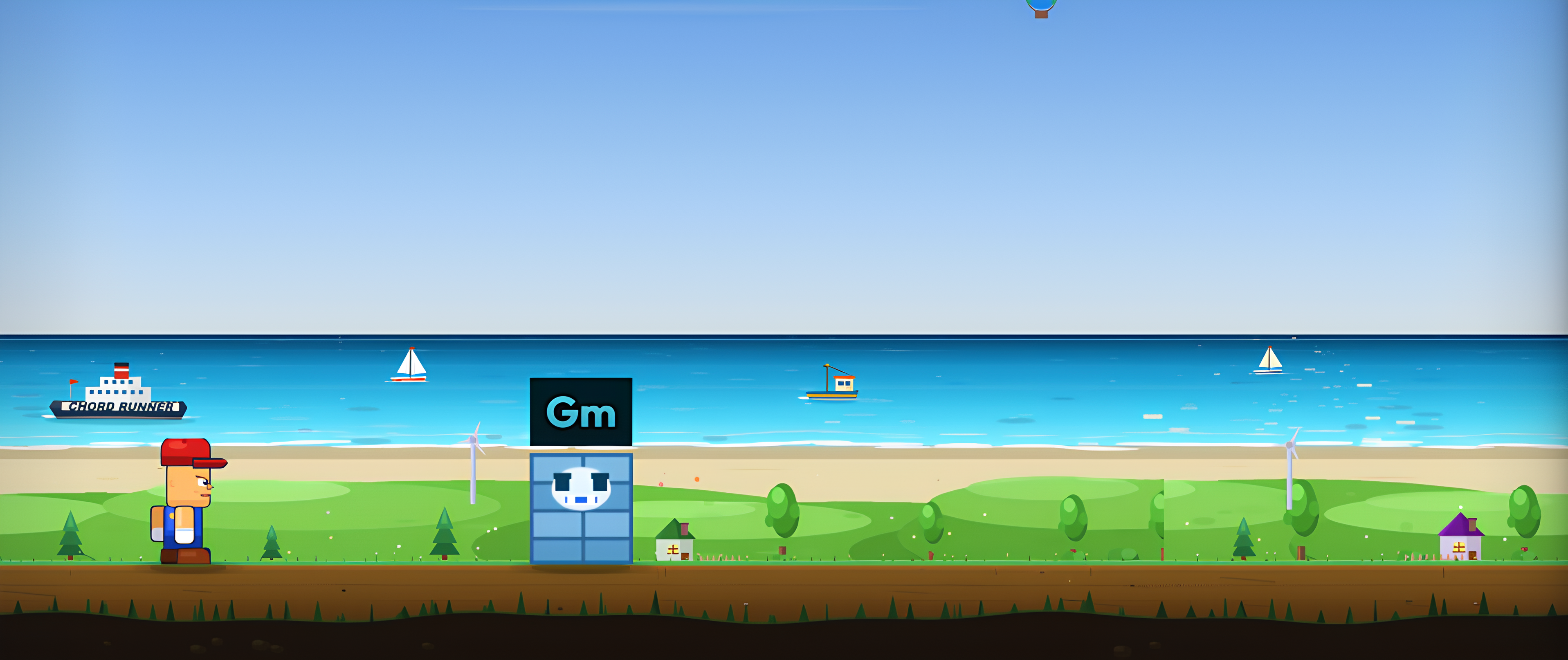
Learn by playing the actual game
A chord appears, you play it, the runner keeps going. No download, no signup. Plug in a MIDI keyboard or just use your microphone.
▶ Try ChordRunner Free Free demo - no download, no signup.What makes a chord major
Every major chord is built the same way: start on the root, count up 4 semitones for the third, then 3 more semitones (7 from the root) for the fifth. C major is C, E, G. Move the whole pattern up to start on F# instead, and you get F#, A#, C#, the same shape, a different starting point. Nothing else changes between major chords except which note you started counting from.
That major third is what gives the chord its bright, resolved sound. Drop it by one semitone and the same chord turns minor, which is the entire difference between the two, covered in full on the minor chords page.
All 12 major chords
Same recipe, all 12 starting notes. In root position, the right hand fingering is thumb-middle-pinky (1-3-5) for every one of them, and the left hand mirrors it with pinky-middle-thumb (5-3-1):
| Chord | Notes | RH fingering |
|---|---|---|
| C | C - E - G | 1-3-5 |
| C# | C# - F - Ab | 1-3-5 |
| D | D - F# - A | 1-3-5 |
| Eb | Eb - G - Bb | 1-3-5 |
| E | E - Ab - B | 1-3-5 |
| F | F - A - C | 1-3-5 |
| F# | F# - Bb - C# | 1-3-5 |
| G | G - B - D | 1-3-5 |
| Ab | Ab - C - Eb | 1-3-5 |
| A | A - C# - E | 1-3-5 |
| Bb | Bb - D - F | 1-3-5 |
| B | B - Eb - F# | 1-3-5 |
The fingering never changes because the shape never changes, only its position on the keyboard does. Once your hand learns what "root, major third, fifth" feels like in one key, every other key is the same feeling in a new spot.
Try it: build the chord before time runs out
A major chord name appears from the table above, you click its three notes on the keyboard below before the bar drains. Get it right and the next one comes a little faster:
How to practice them until they are automatic
Work one chord type at a time, but do not stop at the keys you already know. Pick the root you find hardest, C# major or F# major or Ab major are common sticking points, and isolate it: play it 10 times slowly and correctly before adding speed. Only once a chord is reliably correct is it worth pushing tempo, since fast repetition of a wrong shape just makes the wrong shape automatic instead.
After each root is solid on its own, drill them in random order, not the order you learned them in. A fixed order lets your hand learn "what comes next" instead of actually recognising the chord name, which quietly fakes progress. Random order is what exposes whether a chord is truly automatic or just familiar in sequence.
Once all 12 major chords hold up under a random, timed test, you can put exactly that to practice for free in ChordRunner, right in the browser, on a MIDI keyboard or straight into a microphone.
Common questions
What notes make up a major chord?
A root, a major third (4 semitones up), and a perfect fifth (7 semitones up). C major is C, E and G. Every major chord in any key is built the exact same way, just counted from a different starting note.
Which finger goes on which note of a major chord?
In root position, right hand uses thumb on the root, middle finger on the third, and pinky on the fifth (1-3-5). Left hand mirrors it: pinky on the root, middle finger on the third, thumb on the fifth (5-3-1). That fingering holds for every major chord in root position, not just C.
Do I need to learn all 12 major chords, or just the common ones?
Eventually all 12, since real songs move between keys and a chord you have not drilled will always cost you a beat of hesitation. Start with the ones in keys you actually play in, but do not stop there, because the moment a song modulates you will want the rest just as automatic.
How do I know when a major chord is actually automatic?
When you can play it correctly from its name alone, at a fast, unpredictable pace, without your hand pausing to search for the shape. If you can only get it right slowly, or only in a fixed order, it is memorised, not automatic yet. Pair this with the minor chords so you can tell the two apart under the same pressure.